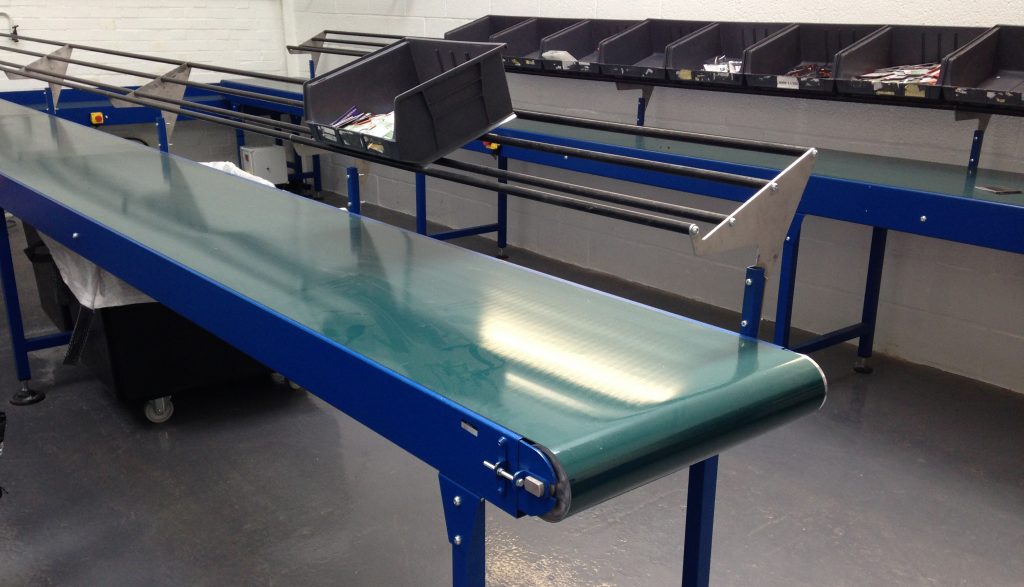

When it comes to conveying large quantities of merchandise in a fast, efficient and cost-effective manner, no other system can match the advantages offered by the benefits of a bespoke conveyor system. Whether it is in the form of a pallet conveyor or a pallet loader, there is a system that can fit the most specific requirements. No matter what the project, any size, shape, there is the perfect conveyor system for every type of delivery. For Vacuum Conveying, visit a site like Aptech.uk.com

One of the most popular types of conveyors available to companies is the conveyor that can be installed on site. These conveyors are able to be configured to cater for any type of project, including warehouse applications, distribution and warehousing, and even the installation of pallets on a production line. When it comes to transporting goods by means of a conveyor system, the flexibility it offers allows for quick, safe and efficient transport of the goods, and minimises the risk of damage occurring during transportation. Furthermore, the system can be customised to cater for any type of product, ensuring that the product is delivered with maximum efficiency.

If you are planning on implementing a bespoke conveyor system to your company, make sure you hire an expert conveyor supplier who will be able to take care of all aspects of your project. A provider can also take care of the design and development of your conveyor system, ensuring that your products reach their customers with high levels of quality and safety. With bespoke conveyor systems, the benefits of a more efficient and safer working environment are a reality that no business should overlook.
Industries that rely on conveyor systems
Conveyors move materials from one point to another quickly and efficiently, which is why they are found in so many industries. Mining, automotive, agriculture, electronics, food processing, aerospace, pharmaceuticals, chemicals, bottling, print finishing and packaging all depend on them. They carry everything from nuts, beans and seeds to bottles, cans, car parts, scrap metal, pills, timber and furniture. Supermarket checkouts and airport baggage belts are familiar everyday examples.
Conveyors can lift loads between levels, a job that would be heavy and costly by hand, and they are generally safer than forklifts. They can be powered hydraulically, mechanically or automatically, and many include safety features to prevent accidents.
Choosing the right system starts with knowing how it will be used. Consider whether it needs to transport, accumulate or sort items, the size, weight and shape of what it will carry, and where loading and collection points must be. To keep it running at full capacity, inspect it regularly, monitor motors and gearboxes, keep spare parts in stock and train staff properly.
Choosing a telescopic conveyor for loading
Telescopic conveyors are a common part of a bespoke loading set-up, and the right one depends on what you want it to achieve. Start with your goals: lower handling costs, higher productivity, faster turnaround, more flexible facilities, a better working environment or freeing staff for other jobs.
Then look at the practical details. Consider the volume of goods passing through, whether they are incoming, outgoing or both, the type and weight of a typical item, the vehicles that visit, door access, space inside the building, whether there is a raised dock and the staff available. Function, build quality, safety features, integration with other equipment and lifetime costs all matter.
Whether a door is used for loading, unloading or both helps decide whether a telescopic belt conveyor or a roller conveyor is more economical. Units can run on rails or wheels, and rails make sense when one conveyor serves several doors. Where health and safety is the priority, ergonomic features are worth adding, and features can be combined to suit the business.
Questions to ask before choosing a conveyor
A bespoke system works best when you are clear about what you want it to achieve. Start with your goals: reducing overheads, raising productivity, speeding up turnaround, making warehouse space more adaptable, improving working conditions or freeing staff for other tasks. Discussing these with a specialist helps show how changes will affect your storage and wider operations.
Then look at the practical details. Consider the volume of goods passing through, whether you handle incoming or outgoing deliveries or both, and the type and weight of a typical item. Think about the number and type of vehicles that visit, access to the loading door, the space inside the warehouse, whether there is a raised dock and how easily staff can reach the equipment.
These answers decide whether extendable belts or gravity rollers will be more efficient, and whether the conveyor should be mobile on wheels or mounted on rails to serve several doors. If safety is the priority, ergonomic features are worth having. Capacity, quality and lifetime costs should all be weighed before deciding.